Montessori at a Turning Point: Reflections from The Montessori Event 2026
By Tina Patel, CEO of noorana
The conversations in Washington, D.C. felt familiar, though more focused than in years past.
At The Montessori Event 2026, I had the opportunity to sit with leaders from all over the country and truly listen to where they are, what they're carrying, and how they're thinking about the future of their schools. Much of what I heard echoed conversations our team had just weeks earlier at AMI-USA in San Diego, but something in D.C. felt different. The themes were similar, but the tone had shifted.
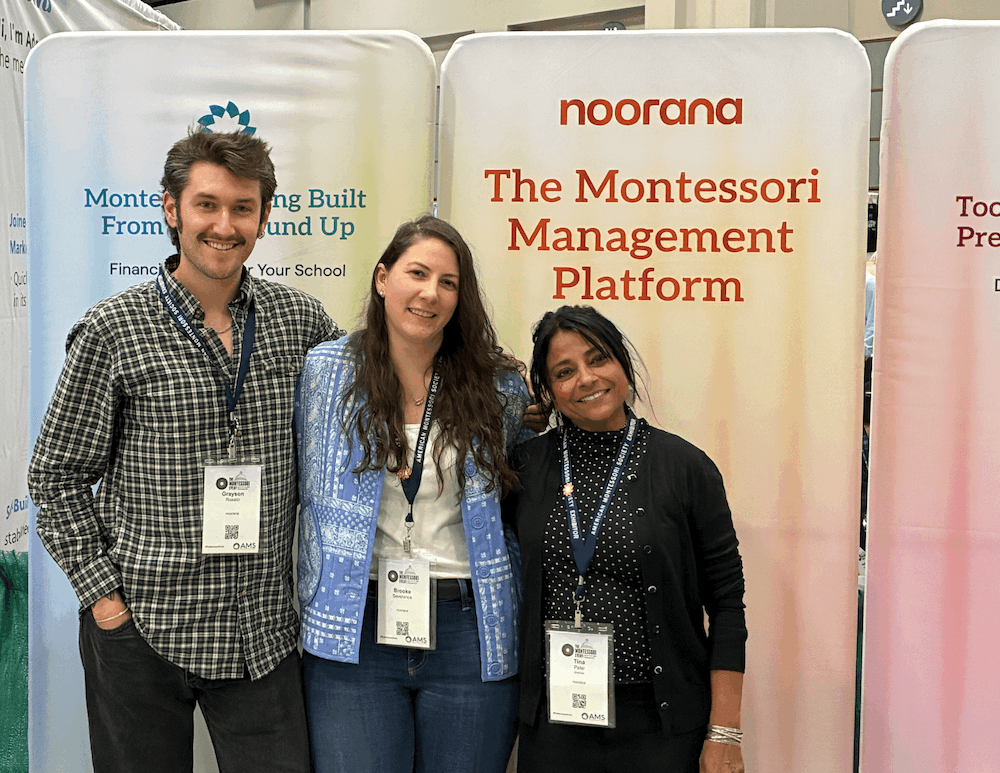
People weren't collecting ideas just to store them. They were solving real problems in real time.
Brooke Severance, who collaborates closely with our schools daily, noticed it as well.
People weren't just browsing," she told me. "They're actively trying to figure out how to make things work better."
In previous years, these conferences had a more exploratory nature. Leaders would gather ideas, set some aside for later, and return home with a list. This year, they arrived with specific frustrations and a clear understanding of where improvements were needed. Administrative workflows that take more time than necessary. Billing processes that require repeated follow-up. Communication tools that have no real connection to what’s happening in the classroom.
None of it is disastrous on its own. It's the kind of friction that builds gradually until you stop noticing it. A report that takes longer than expected. A process that only functions because one person knows how to navigate it. A workaround so familiar that nobody questions it anymore. Over time, that friction adds up and quietly distracts from the work that truly matters.
What gave me hope was that leaders weren't overwhelmed. They had clarity about where things were breaking down. Most appeared genuinely ready to act, as long as what they were adopting aligned with how their schools actually operate. That felt meaningful to me.
Sustainability came up in almost every conversation I had, and it's something I've been thinking about since I got home.
Brooke summed it up: "There was a lot of discussion around sustainability. Both financially and operationally."
Schools are managing rising costs, staffing challenges, and increased expectations from families, all while safeguarding what makes their programs valuable. The leaders I met weren't just focused on the coming year; they considered what keeps a school sustainable and true to itself over the long term.
I kept returning to the same idea on the flight home. Montessori is at a crossroads. Not because the philosophy is lacking. It isn't. But because our systems haven't matched our values, and that gap is quietly making things more difficult for those doing this work every day.
And I want to clarify something. This isn't a leadership issue. The people I met in Washington were thoughtful, capable, and deeply dedicated. The problem isn't who they are; it's what they're working with. When systems are broken or outdated, they drain capacity that should be focused on teaching, connection, and the kind of leadership that truly shapes a school. I kept saying this at the booth, and I'll say it here: that's not a people problem. It's a systems problem.
What moved me most, however, was how leaders discussed change itself.
They're open to it, but they are cautious, and I genuinely admire that.
Brooke described it well: "It felt like people are open to change, but thoughtful about it. They're not necessarily looking for something flashy. More something that actually fits into how they run their schools and reduces friction."
Montessori leaders aren't trying to disrupt what's already working. They're seeking things that integrate smoothly and quietly. Tools that assist Guides without increasing their workload. Systems that make billing and administrative tasks easier without adding new complications. Visibility into daily operations without needing another platform to manage.
My belief, and the reason I created noorana, is that Montessori doesn't need more layers. It needs clarity, alignment, and infrastructure that support the work already happening inside these schools. When that's in place, something shifts. Leaders spend less time managing and more time connecting with children, guides, and families. That's what this has always been about.
One of the most encouraging aspects of The Montessori Event 2026 was the variety of schools present. Some are expanding, some are stabilizing, and others are rethinking their models entirely. There's no single solution, and I believe that's a healthy sign.
But there is a shared goal: a willingness to honestly assess whether the systems surrounding this work truly serve the people involved.
For our team, this conference deepened an important conversation: how schools can stay true to their values while establishing clarity that endures over time.
To everyone who stopped by the noorana booth and shared so openly: thank you. These conversations are why we do what we do. The work is bigger than any of us, and I couldn't be more hopeful about where it's headed.